
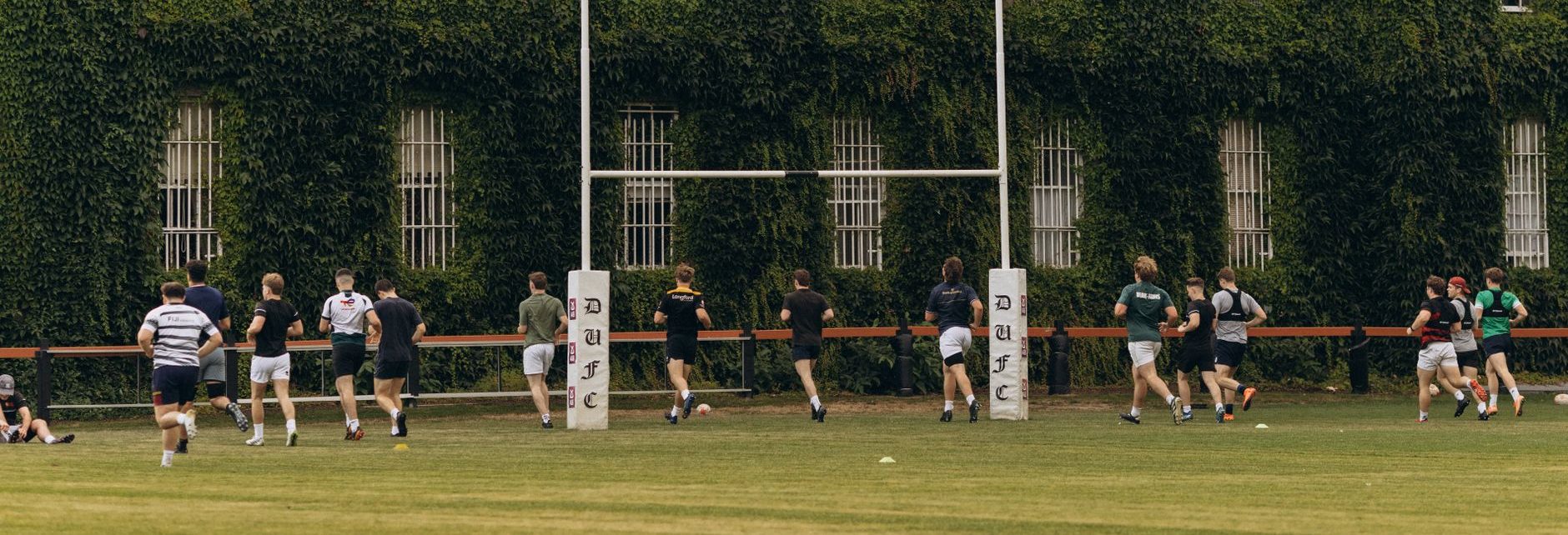
Energy costs are rising — here's what rugby and cricket clubs need to know
From the floodlit pitch on a Tuesday night training session to the bar humming after a Saturday match, sports clubs run on energy. For rugby and cricket clubs in particular — many of which operate significant facilities including clubhouses, changing rooms, pitches, groundskeeping equipment and catering operations — energy is one of the largest and most controllable costs on the balance sheet.
And right now, that cost is under serious pressure.
Wholesale gas and electricity prices have reached multi-year highs in 2026, driven by a combination of geopolitical instability in the Middle East, European gas storage running well below historical averages, and tight global LNG markets. For clubs that haven’t actively managed their energy procurement, the impact on annual budgets can be significant — and it’s only likely to get worse heading into winter.
The good news is that most clubs are paying more than they need to. With the right support, that changes.
The energy challenge for sports clubs
Rugby and cricket clubs have a consumption profile that’s often more complex than it first appears. Consider what’s running on a typical matchday or training evening:
- Floodlighting across multiple pitches
- Heated changing rooms and shower facilities for players and officials
- Clubhouse heating, lighting and ventilation
- Bar and catering equipment — refrigeration, dishwashers, ovens, coffee machines
- Groundskeeping facilities including machinery charging and irrigation pumps
- Car park and exterior lighting
- Security and CCTV systems
Outside of matchdays, grounds maintenance continues year-round. Cricket clubs in particular face the additional challenge of artificial heating for indoor nets and, for larger clubs, groundskeeping requirements that run from early spring through to late autumn.
The result is a consumption profile with significant peaks — on matchdays and match evenings — combined with steady background consumption throughout the week. Without active management, this kind of profile attracts higher demand charges and leaves clubs exposed to poor contract terms.
Why most clubs are overpaying
The majority of sports clubs — particularly at the community and semi-professional level — approach energy in one of two ways. Either they accept whatever renewal offer their existing supplier sends them, or they don’t review their contract until it’s almost expired, leaving themselves with limited options and little negotiating leverage.
Both approaches are expensive.
Energy suppliers know that most clubs don’t have a dedicated energy manager. They price accordingly. Out-of-contract rates — what you pay if your contract expires without a new one in place — can be dramatically higher than a negotiated deal. In the current market, the cost of passivity is high.
An independent energy consultant changes this dynamic entirely. Rather than working for the supplier, they work for you — going to the whole market on your behalf, comparing every available offer, and advising on the right contract structure for your club’s specific usage pattern.
What an energy consultant delivers for your club
Whole-of-market procurement
A consultant approaches every relevant supplier simultaneously and secures competitive offers that simply aren’t available to clubs going direct. The energy market is highly competitive, and suppliers price differently depending on how business is brought to them. The difference between the best and worst available rates for an identical consumption profile can be substantial.
Market timing
Knowing when to fix your energy contract matters. In a volatile market — and 2026 has been extremely volatile — buying at the wrong moment can lock in unnecessarily high rates, while waiting too long leaves you exposed. A consultant monitors the wholesale market daily and advises you on the optimal moment to act, based on your specific renewal timeline and risk appetite.
Contract structure and length
Not all energy contracts are the same. Fixed-price contracts offer certainty; flexible contracts offer the potential for savings in a falling market. The right choice depends on your club’s financial position, risk tolerance and renewal date. A consultant helps you make an informed decision rather than defaulting to whatever the supplier offers.
Bill validation and invoice checking
Energy bills contain errors more often than most clubs realise. Incorrect unit rates, wrong meter readings, misapplied standing charges and levy errors are common — and they add up. A consultant checks your invoices against your contracted terms and chases any discrepancies on your behalf, recovering money you didn’t know you were owed.
Supplier and meter management
When problems arise — supply issues, billing disputes, meter faults, new connections for pitch improvements or clubhouse extensions — navigating the supplier relationship takes time and specialist knowledge. A consultant handles this on your behalf, resolving issues faster and protecting your club from the cost of disputes dragging on.
Levy and tax optimisation
Many clubs are paying the wrong rate of VAT on their energy. If your consumption falls below the de minimis threshold, or if your premises have mixed-use characteristics, you may be entitled to pay 5% VAT rather than 20%. Similarly, certain levy exemptions may apply. A consultant audits your position and recovers what you’re owed.
Season-specific considerations
Rugby clubs
The rugby season runs from September through to May, meaning the highest energy demands — floodlit training, heated facilities, busy clubhouses — coincide almost exactly with the period when wholesale energy prices are at their peak. Winter evening training sessions are energy-intensive, and clubs that haven’t planned for winter pricing are most exposed.
Larger rugby clubs with hospitality facilities, function rooms or commercial letting arrangements have an even more complex energy profile to manage — and correspondingly more to gain from professional procurement support.
Cricket clubs
Cricket clubs present a different but equally significant challenge. The season is concentrated between April and September, with peak activity in summer. However, many clubs operate indoor training facilities, nets and gymnasiums throughout the winter, meaning year-round consumption is higher than it might appear.
Groundskeeping energy requirements — irrigation, equipment charging, machinery — are often overlooked in energy audits but can represent a meaningful portion of annual consumption. For clubs with artificial pitches or indoor facilities, the all-year-round picture is particularly important to manage.
Both sports share the challenge of the clubhouse — a facility that runs throughout the year, hosting functions, meetings and social events well beyond the playing season, and one that typically accounts for a disproportionate share of energy spend.

Practical steps your club can take now
Beyond procurement, there are operational measures that reduce consumption and lower costs without affecting the club experience:
Review floodlighting. LED floodlights consume significantly less energy than older metal halide or fluorescent systems. For clubs still running older lighting, the upgrade cost is often recovered within two to three seasons through energy savings alone.
Check heating controls and schedules. Clubhouse heating running when the building is empty is one of the most common sources of avoidable waste. A basic review of heating schedules and thermostat settings can deliver immediate savings.
Audit your bar and catering equipment. Refrigeration running inefficiently, dishwashers operating half-full and equipment left on standby overnight all contribute to unnecessary consumption. Simple operational changes often have an immediate impact.
Consider solar PV. Clubhouse roofs and south-facing outbuildings can often accommodate solar panels. For cricket clubs in particular, summer generation aligns well with peak season activity. A consultant can advise on whether the investment case stacks up for your site.
Look at your meter setup. Clubs that have expanded facilities over the years sometimes find themselves on inappropriate meter arrangements that result in higher standing charges or demand charges than necessary. Getting the metering right is a quick win that requires no change to how you use energy.
The cost of doing nothing
With energy prices at current levels, the cost of poor procurement is higher than it has ever been. A club paying £20,000 to £30,000 a year on energy that could be procured for meaningfully less with the right support is leaving money on the table that could fund a new set of training kit, pitch improvements, junior development programmes or reduced membership fees.
The clubs that manage this well are the ones that plan ahead, engage expert support early and treat energy as a cost to be actively managed rather than a bill to be passively paid.
Cibus Energy: supporting sports clubs across the UK
At Cibus Energy, we work with sports clubs, leisure operators and community organisations to reduce their energy costs and simplify their energy management. We understand the seasonal, matchday-driven consumption patterns of sports clubs — and we know how to procure energy in a way that reflects how you actually use it.
Our services include whole-of-market energy procurement, flexible purchasing strategies, bill validation, supplier management, meter services and sustainability support — all delivered by a team that speaks your language, not the supplier’s.
Contact Cibus Energy today for a free, no-obligation energy review. We’ll assess your current contract, benchmark your rates against the market, and tell you exactly what you could save.